The FIFA World Cup 2026
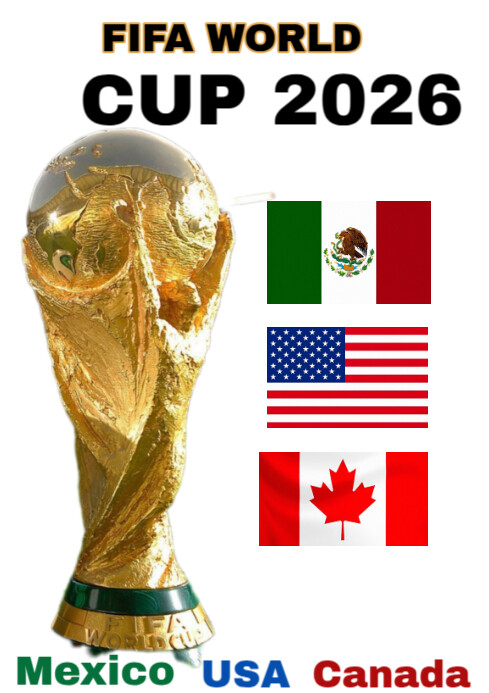
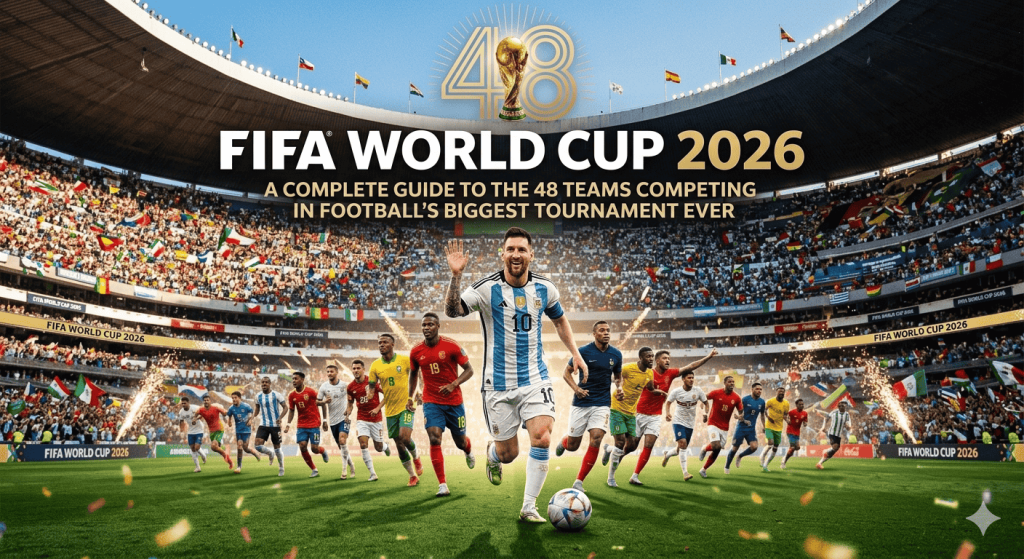
The FIFA World Cup 2026 is expected to alter international football. The tournament, set to take place in the United States, Canada, and Mexico, will be the largest FIFA World Cup ever organised. For the first time in history, 48 national teams will compete for football’s most coveted trophy, up from the previous 32-team format used since 1998.
This historic expansion demonstrates football’s expanding popularity worldwide. More countries are now able to participate on the world’s biggest sporting stage, resulting in fresh storylines, rivalries, and chances for growing football nations. With 104 matches spread across 16 host cities and three host countries, the 2026 World Cup promises to be the most diverse and thrilling tournament yet.
The new format will provide spectators with more football, more dramatic knockout matches, and a wider range of playing styles from all continents. Traditional powerhouses like Argentina, Brazil, Germany, France, Spain, and England will face stiffer competition from ambitious teams seeking to make history.
Understanding The New 48-Team Format
The introduction of 48 teams represents the most important development in World Cup history. Previously, only 32 teams were eligible for the competition, limiting participation for many deserving nations. FIFA’s decision to expand the competition seeks to improve global representation while also supporting football development internationally.
The 48 teams will be split into twelve groups of four teams each. Each squad will participate in three group stage matches. The top two teams from each group, as well as the eight best third-place teams, will proceed to the new round of 32. With this additional elimination stage, the ultimate champion could play as many as eight matches before winning the trophy.
The new format opens up more potential for shocks and underdog stories. Smaller football nations now have a realistic possibility of competing with the world’s best and displaying their talent to a global audience.
Host Nations Prepare for History
The 2026 World Cup will be co-hosted by three countries, making it the first event organised by three nations.
The United States
The majority of the tournament’s matches, as well as several of the most critical knockout games, will take place in the United States. Football has grown tremendously in the country over the last two decades, and the World Cup gives a significant opportunity to further elevate the sport.
The American team, led by coach Mauricio Pochettino, aspires to have its best World Cup showing yet. The team includes excellent players like Christian Pulisic, Weston McKennie, Yunus Musah, Tim Weah, and Folarin Balogun. Playing in front of enthusiastic home fans could provide a big benefit.
Canada
Canada is entering the competition with rising confidence. Since returning to the World Cup in 2022, Canadian football has grown rapidly. Jesse Marsch, the head coach, has constructed an enthusiastic and disciplined team capable of competing with stronger opponents.
Canada’s top star is Alphonso Davies, one of the world’s best left-backs, while striker Jonathan David is still one of Europe’s most consistent goal scorers. The Canadian team wants to use home support as inspiration to complete a historic run.
Mexico
Mexico will become the first country to host World Cup matches in three different tournaments, following previous hustings in 1970 and 1986. Football is strongly rooted in Mexican culture, and the atmosphere inside stadiums is likely to be electrifying.
Javier Aguirre, a veteran coach, commands a talented roster that includes Santiago Giménez, Edson Álvarez, César Montes and other senior players. Mexican fans expect their team to get past the Round of 16, where they have frequently fallen short in recent championships.
Argentina’s Defending Champions Seek Glory Again
Argentina joins the competition as the defending world champion, following their epic victory in Qatar in 2022. Under coach Lionel Scaloni, the team has become one of the most balanced and tactically astute squads in international competition.
Much attention will be paid to Lionel Messi, who may be playing in his final World Cup. Messi is still one of football’s finest players, despite being in his late twenties. He is supported by brilliant stars Julián Álvarez, Enzo Fernández, Alexis Mac Allister, Cristian Romero, and Lautaro Martínez.
Argentina’s mix of experience, leadership, and attacking ability makes them a strong contender to retain the championship.
Brazil’s Quest for the Sixth World Cup
Brazil has won the most World Cups, and the Seleção is expected to compete for the trophy once again. Brazil, led by renowned coach Carlo Ancelotti, has one of the competition’s strongest squads.
New Brazilian talent includes Vinícius Júnior, Rodrygo, Bruno Guimarães, Gabriel Martinelli, and Endrick. Their technical ability, inventiveness, and attacking flair exemplify the classic Brazilian style of football.
Brazilian supporters have been waiting for another World Cup victory since 2002, and hopes remain high as we approach 2026.
Europe’s elite are ready to compete.
Europe sends the most teams to the tournament and is home to many of football’s strongest nations.
England
England has one of the most talented groups in the world. Thomas Tuchel manages the team, which combines youth and experience in all areas of the game.
Harry Kane continues to lead the attack, while Jude Bellingham, Bukayo Saka, Phil Foden, Declan Rice, and Cole Palmer add tremendous quality to the roster. Many analysts feel England has a legitimate chance of winning its first World Cup since 1966.
France
France remains one of the most dangerous teams in world football. Under Didier Deschamps, the French national team has advanced to many major tournament finals and continues to generate world-class players.
Kylian Mbappé is the team’s leader and one of the top stars in international football. Aurélien Tchouaméni, Eduardo Camavinga, William Saliba, and a number of other top players join him.
France’s depth and expertise make them a strong contender for the championship.
Spain
Spain has witnessed dramatic changes in recent years. The emergence of youthful talents like Lamine Yamal, Pedri, Gavi, and Nico Williams has reenergised the national team.
Coach Luis de la Fuente has assembled a dynamic team capable of combining possession football and direct attacking play. Spain’s future appears to be quite bright, and many experts believe they will be among the tournament favourites.
Germany
Germany enters the World Cup determined to rebuild its reputation after a string of poor tournaments. Under coach Julian Nagelsmann, the squad has adopted a more aggressive and modern style of football.
Jamal Musiala, Florian Wirtz, Kai Havertz, Antonio Rüdiger, and Joshua Kimmich are the foundation of a talented group that can compete for the crown.
Portugal
Portugal has one of the most balanced squads in its history. The team, led by Roberto Martínez, consists of both experienced veterans and promising young players.
Cristiano Ronaldo may compete in his final big event, while players like Bruno Fernandes, Bernardo Silva, Rafael Leão, João Neves, and Gonçalo Ramos give excellent assistance.
Africa’s strongest teams.
The expansion to 48 teams has greatly expanded African representation, opening up intriguing prospects for the continent’s greatest nations.
Morocco
Morocco drew global notice when it advanced to the 2022 World Cup semifinals. Under coach Walid Regragui, they seek to demonstrate that success is not a one-time occurrence.
Morocco’s top players, including Achraf Hakimi, Yassine Bounou, Sofyan Amrabat, and Brahim Díaz, are capable of competing against great opponents.
Senegal
Senegal is one of Africa’s most powerful football nations. Their roster combines physical strength, technical ability, and international experience.
Egypt
Egypt, led by superstar Mohamed Salah, aspires to make a huge international impact. Salah’s leadership and goal-scoring abilities will be critical to their success.
Ghana, Algeria, Tunisia, Côte d’Ivoire, South Africa, Democratic Republic of the Congo, and Cape Verde.
These nations each have distinct styles and great players capable of causing surprises during the competition.
Asia’s Rising Football Powers
Asian football is steadily improving, and numerous nations enter the event with legitimate hopes.
Japan
Japan has emerged as one of Asia’s most renowned football nations. Their systematic approach, tactical structure, and technically brilliant players make them a formidable opponent.
South Korea
South Korea remains led by Son Heung-min, one of Asia’s finest footballers. The team’s speed and attacking skills enable them to challenge tougher nations.
Australia
Australia’s perseverance and battling spirit have gained them respect at successive World Cups. Their muscular style frequently creates problems for opponents.
Saudi Arabia, Iran, Iraq, Jordan, Qatar and Uzbekistan
These nations demonstrate the developing strength of Asian football. Uzbekistan and Jordan, in particular, are fascinating developing football nations poised to make history.
South America’s additional contenders
Beyond Argentina and Brazil, South America has other excellent teams capable of making lengthy tournament runs.
Uruguay, led by Marcelo Bielsa, mixes established stars with talented young players. Colombia continues to impress under Néstor Lorenzo, while Ecuador and Paraguay have disciplined teams capable of defeating tougher opponents.
South American teams are noted for their enthusiasm, technical ability, and competitive spirit, making them formidable opponents in every competition.
New Nations Making History.
One of the most interesting features of the extended World Cup is the presence of new nations. For the first time, countries including Uzbekistan, Jordan, Curaçao, and Cabo Verde will be able to compete on football’s grandest platform.
For some countries, qualifying alone is a historic accomplishment. Their participation highlights how football is growing in every section of the world.
These newcomers may not be among the favourites, but World Cup history has demonstrated that underdogs can provide great moments.
Coaches Who Could Define the Tournament.
The managers competing in the World Cup 2026 are among the most successful in football.
Carlo Ancelotti heads Brazil, having won multiple Champions League titles. Lionel Scaloni turned Argentina into world champions. Didier Deschamps led France to a World Cup victory and another final appearance. Thomas Tuchel brings tactical expertise to England, while Mauricio Pochettino hopes to excite the United States at home.
These coaches’ decisions could impact the tournament’s fate.
Players To Watch
The competition will include some of football’s most prominent names. Several players, including Kylian Mbappé, Jude Bellingham, Vinícius Júnior, Erling Haaland, Jamal Musiala, Pedri, Lamine Yamal, Harry Kane, Mohamed Salah, and Alphonso Davies, are likely to receive significant attention.
Meanwhile, iconic players like Lionel Messi and Cristiano Ronaldo may be making their final World Cup appearances, heightening the significance of the tournament.
Conclusion
The FIFA World Cup 2026 marks a new chapter in football history. With 48 nations, three host countries, 104 matches, and an abundance of world-class players, this promises to be the most ambitious and exciting World Cup ever.
From defending champions Argentina and traditional powerhouses Brazil, France, Germany, England, and Spain to ambitious newcomers Uzbekistan and Jordan, every team enters with the goal of hoisting football’s most cherished prize.
The expanded tournament will provide greater worldwide representation, more competitive matches, and more possibilities for spectacular moments. As football fans prepare for six weeks of excitement, one thing is certain: the FIFA World Cup 2026 will go down in history as one of the most historic tournaments ever held.