Mexico World Cup Travel Guide 2026 | FIFA Travel Tips for Mexico City, Guadalajara, and Monterrey.
Are you planning to attend the FIFA World Cup 2026 in Mexico? Learn about host cities, transportation, lodging, safety precautions, attractions, dining experiences, and anything else football fans need to know.
Mexico World Cup Travel Guide 2026: What You Should Know Before the FIFA World Cup
The FIFA World Cup 2026 will make history in a variety of ways, one of the most notable being the return of the tournament to one of football’s most passionate nations—Mexico. Mexico, as co-host with the United States and Canada, will once again become the football world’s center, greeting millions of fans eager to experience the excitement, culture, and memorable atmosphere that only Mexican football can deliver.
For football enthusiasts, Mexico has something absolutely unique. This is a country where sports are profoundly integrated into daily life. Stadiums explode with chanting, city streets are packed with supporters dressed in national colours, and entire communities celebrate each goal as if it were a national holiday. Mexico promises to be one of the most intriguing FIFA World Cup 2026 sites, thanks to its world-renowned gastronomy, rich history, vibrant culture, and comparatively low travel expenses.
This Mexico World Cup Travel Guide will help you prepare for an outstanding football experience, whether you’re attending a single match or staying for weeks after the event.
Why is Mexico a dream destination for World Cup fans?
Few countries are as passionate about football as Mexico. The country has a rich and proud football history and will be the first to host the men’s FIFA World Cup three times, having previously hosted the tournament in 1970 and 1986.
Mexico’s blend of football culture and tourism options appeals to international visitors in particular. Fans can spend the morning seeing old historical places, the afternoon sampling real Mexican cuisine, and the evening immersed in the electrifying atmosphere of a World Cup match.
Mexico is also one of the less expensive locations among the three host countries. Accommodation, travel, dining and entertainment prices are frequently lower than those in many major cities in the United States and Canada. Mexico offers exceptional value for World Cup supporters while also providing a world-class travel experience.
Beyond football, tourists will find breathtaking architecture, vibrant festivals, warm towns, and some of the world’s most acclaimed cuisine. Travelling between cities is an adventure in itself, as each has its own individuality.
Mexico’s Role in the FIFA World Cup 2026
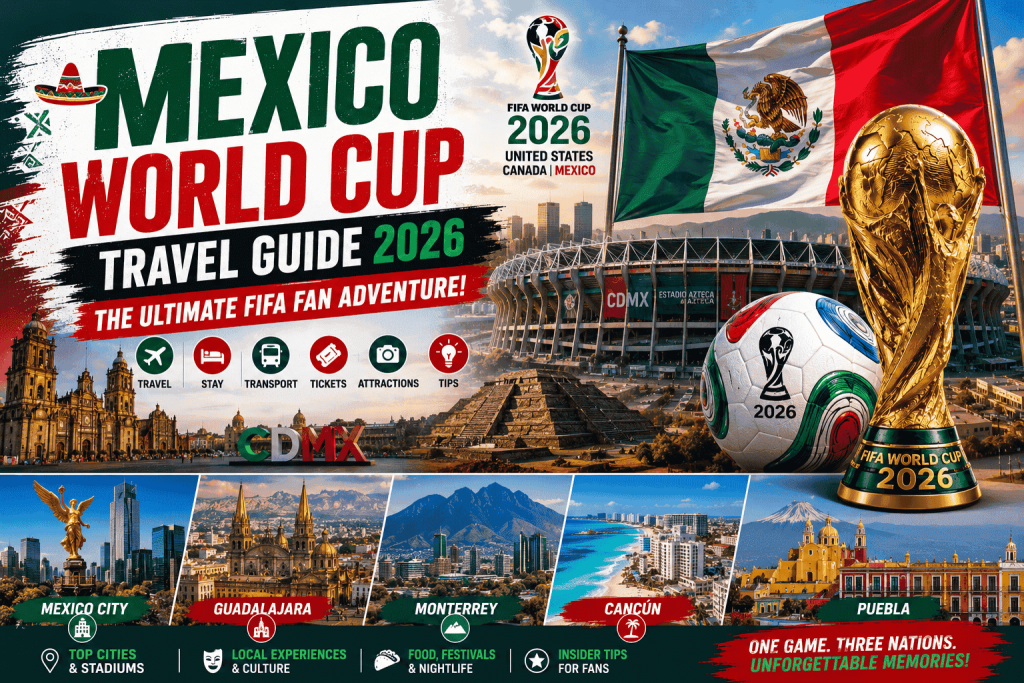
Mexico will stage matches in three iconic cities:
- Mexico City.
- Guadalajara.
- Monterey.
Each venue provides a unique football atmosphere and travel experience. Together, they embody modern Mexico’s cultural, economic, and sporting variety.
Mexico City will once again make football history by hosting matches at the iconic Estadio Azteca, one of the world’s most famous venues. Guadalajara and Monterrey will complement the capital by presenting their own distinct football histories and enthusiastic fan bases.
Attending matches in all three host cities offers fans a unique opportunity to explore Mexico while enjoying the world’s largest athletic event.
Mexico City, the heart of Mexican football.
Mexico City is set to be one of the most popular places during the World Cup. As one of the world’s major cities, it provides an infinite variety of football, culture, history, and entertainment.
Estadio Azteca is without a doubt the city’s most popular destination among football lovers. This historical stadium has hosted some of football’s most memorable events, including World Cup finals and unforgettable performances by legendary players. It will become a global football landmark once more during the FIFA World Cup in 2026.
Aside from the stadium, Mexico City has other attractions. Visitors can explore the ancient city center, which is a UNESCO World Heritage Site full with colonial buildings, museums, and cultural monuments. The iconic Zócalo square is the city’s symbolic heart and frequently holds large public celebrations.
Foodies will find themselves in heaven. Street tacos, tamales, churros, and classic Mexican foods are available throughout the city, offering exceptional gastronomic experiences at reasonable prices.
International travelers flock to neighborhoods like Roma, Condesa, Polanco, and Coyoacán for their restaurants, cafes, nightlife, and cultural attractions.
Guadalajara is the cultural capital of Mexico.
Guadalajara is often regarded as Mexico’s cultural heart. Known as the origin of mariachi music and tequila traditions, the city provides visitors with a uniquely Mexican experience.
Football is profoundly ingrained in Guadalajara’s identity. The city is home to one of the country’s most popular clubs, and it has a strong football culture that generates an unforgettable atmosphere during big games.
Visitors can discover stunning colonial buildings, bustling plazas, old churches, and traditional marketplaces. Guadalajara also acts as a gateway to surrounding attractions like Tequila, where visitors may learn about the making of Mexico’s most famous liquor.
Guadalajara has the potential to be a remarkable World Cup destination for those looking for culture, heritage, and football.
Monterrey is Mexico’s modern football powerhouse.
Located in northern Mexico, Monterrey provides a unique viewpoint on the country. The city is well-known for its magnificent skyline, business sectors, and strong sporting culture.
Football is essential to Monterrey’s identity. The city has some of the most ardent fans in North America and frequently draws enormous crowds to local events.
Visitors can enjoy sophisticated shopping malls, superb restaurants, and local natural attractions such as the breathtaking mountains that surround the city. Monterrey’s distinct combination of urban development and natural beauty makes it an intriguing World Cup location.
The city’s proximity to the US border makes it a popular destination for fans travelling between Mexico and the USA.
How to get between Mexico’s World Cup host cities.
One of Mexico’s benefits as a World Cup destination is its relatively good connectivity between host cities.
Domestic flights are the fastest way to travel between Mexico City, Guadalajara, and Monterrey. Major airlines run frequent routes between these destinations, allowing you to attend multiple matches around the country.
Long-distance buses are another popular choice. Mexico’s bus network is one of the best in Latin America, with luxurious coaches, modern terminals, and reasonable fares. Many guests are astounded by the quality and ease of interstate bus travel.
Rental automobiles can also be beneficial for short trips and exploring the region. Driving in large cities, however, can be difficult for visitors who are inexperienced with the local traffic circumstances.
It is highly recommended to plan transportation ahead of time, particularly during peak tournament weeks.
Where to Stay During the World Cup?
Accommodation demand is projected to rise throughout the event, especially in regions near stadiums and city centers.
Polanco, Roma, Condesa, Reforma, and Coyoacán are among Mexico City’s most popular neighborhoods with international visitors. These districts offer great food, transit, and sightseeing options.
Many visitors to Guadalajara prefer to stay in either the historic center or newer districts like as Zapopan. Visitors to Monterrey generally pick hotels around San Pedro Garza García or downtown districts.
Budget travelers will find hostels and guesthouses in all host towns, while luxury tourists can enjoy world-class hotels with premium amenities and services.
Booking rooms several months in advance is highly recommended to get the greatest locations and pricing.
Exploring Mexico Beyond the Stadiums
One of the most significant benefits of attending the World Cup in Mexico is the chance to discover a country rich in history and natural beauty.
Visitors to Mexico City can make day trips to Teotihuacán, which is home to the famed Pyramids of the Sun and Moon. History buffs can also visit world-class museums that commemorate Mexico’s intriguing past.
Guadalajara provides tours to the village of Tequila, where visitors may learn about the history of the country’s most famous beverage. Lakes, villages, and cultural attractions are all nearby, offering more exploration opportunities.
Monterrey’s neighboring mountains and parks are popular among outdoor lovers looking for hiking, photography, and beautiful activities.
After the event, fans may prolong their journey and visit Cancún, Puerto Vallarta, Oaxaca, or Los Cabos.
The Food Experience That Every Fan Should Enjoy
Food is one of Mexico’s most appealing features, and World Cup attendees should make full use of the country’s unique culinary heritage.
Tacos are undoubtedly the most recognised Mexican meal, but the country’s cuisine goes well beyond that. Visitors should try:
• Tamales.
• Pozole.
• Mole
• Enchiladas.
• Chiles en Nogada.
• Birria.
• Elote (street corn)
Each region has its own specialities. One of the most effective methods to discover Mexico’s cultural diversity is to sample local cuisine in various host cities.
Food tours, local markets, and family-run eateries frequently offer some of the most authentic experiences.
Safety Tips for International Visitors
Mexico welcomes millions of tourists each year, with the vast majority having safe and pleasant experiences.
Visitors should take basic travel measures such as remaining alert of their surroundings, using authorized transportation services, and refraining from exhibiting expensive belongings needlessly.
Choosing hotels in well-known tourist destinations and using official transportation can help to increase safety.
International tournament attendees should strongly consider getting travel insurance.
Most essential, supporters should stay up to date on local information and tournament-related news throughout their vacation.
Budgeting for a Mexican World Cup Adventure
Mexico is a great deal cheaper than many other places in North America and Europe.
Accommodation, dining, local transit, and entertainment are frequently significantly less expensive than comparable experiences in other big cities. This affordability enables many fans to enjoy a longer stay without drastically raising their expenses.
Travelers should still plan cautiously, since World Cup demand may drive up prices in popular places.
A realistic budget should contain:
• Match tickets.
• International flights.
• Domestic transportation
• Accommodation.
• Food and beverages.
• Activities related to sightseeing.
• Travel Insurance
Booking early is still the most cost-effective method.
Final Thoughts
The FIFA World Cup 2026 provides a once-in-a-generation opportunity to enjoy football in one of the sport’s most passionate countries. Mexico blends famous stadiums, lively culture, delectable cuisine, hospitable people, and spectacular matchday atmospheres to create a trip unlike any other.
Whether you’re watching a game at the iconic Estadio Azteca, discovering Guadalajara’s cultural treasures, or experiencing Monterrey’s modern vitality, each leg of your tour will be distinct.
Mexico could be the highlight of the FIFA World Cup 2026 for football fans looking for an adventure that goes beyond the stadium. By planning ahead of time, embracing local culture, and discovering everything the country has to offer, you’ll make memories that will last long after the last whistle sounds.
The road to the World Cup 2026 passes through Mexico, and it promises to be an incredible ride.